Near the end of the last story I wrote a sentence I thought was finished. "Anne was a daughter of William Keenan and Hika Mapu."
The same afternoon, a reader put me right. Her name was Hikimapu.
The reader was right. The Te Ātiawa pānui writes it Hikimapu, and our own family papers carry it more than one way. Her correction also sent me back into the records with a better question. Not just whose mother was she. Who was she?
This is the fourth story in the Norton and Keenan run. The first followed James Norton to the telegram at Dunedin. The second followed his brother Thomas William to Kekerengu. The third found William Henry Keenan's name beside James's at an 1853 baptism. This one belongs to Anne's mother.
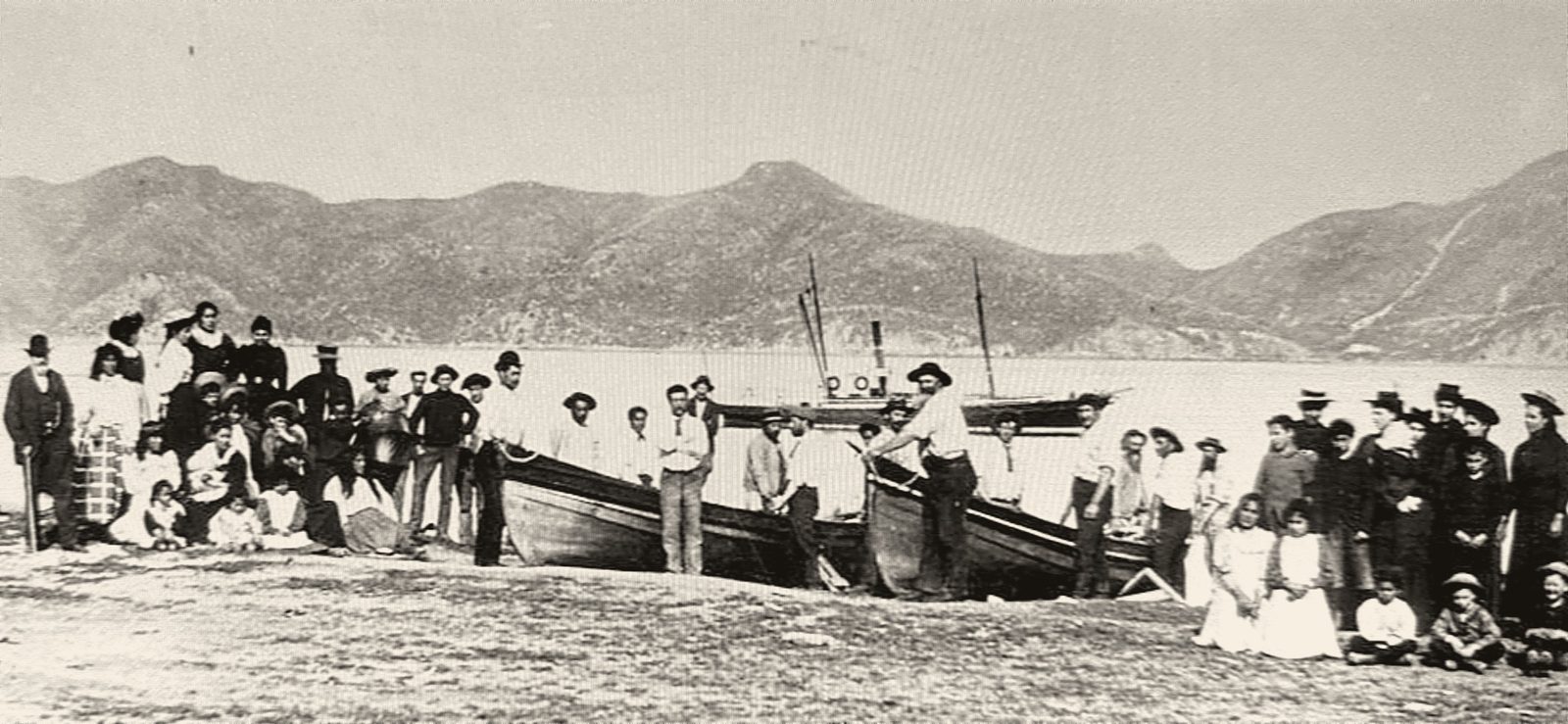
On 28 September 1880, an old whaler named William Keenan died at Te Awaiti.
When the registrar reached the space on his death certificate for his wife, he wrote two words.
"A maori."
Some of you may have seen that line before. It is hard to forget. And it is the only thing that certificate says about her.
That woman was Hikimapu. William had married her twice, once in the Catholic Church and once in the Anglican. She had been baptised Katarina. She was the mother of his children, among them William Henry and Anne Elizabeth.
For her own story, you have to go to a different book.
In 1899, five years after she died, the Māori Land Court heard an application for probate on her will. People from Te Awaiti gave evidence. From that record, as a family compiler later wrote it up, we know this much.
By 1894 Hikimapu was deaf and partly blind. She could understand English when it was spoken to her, but she could not reply in it. She could not write.
On 28 June 1894 she was asked to sign her will, and she made her mark.
She died at Te Awaiti five days later, on the 3rd or 4th of July. Her daughters, Ani Norton and Arihia Thoms, lived in their own homes right next to hers.
In the end, the court ordered that all of her children, or their descendants, receive the shares they were legally entitled to.
The hearing was on Friday 5 May 1899, and its record fills the court's minute book from page 161 to page 176.
So here is what the record holds. In 1880 a government form gave her two words. In 1899 a court gave her sixteen pages, under her own name, and made sure every one of her children was counted.
Two words on a form. Sixteen pages in a court book. And one photograph: an elderly woman sitting in the front row on the beach at Te Awaiti, walking stick in hand, with Norton and Toms family around her. The National Library names her as Katarina Hikimapu. You can see it on the National Library's website.
Sometimes, to find out who someone was, you have to go past the first record and find the second.
A note for anyone searching. If a record gives you "a maori", "native woman" or no name at all for a woman in your family, please do not stop there. That gap usually belongs to the clerk, not to her. Look for the other papers. Church registers, where she may appear under a baptismal name, the way Hikimapu was baptised Katarina. Wills and probate files. Māori Land Court minute books, where women's names, lands and families are often written down in full. Death registrations as old as William's can be searched and ordered through Births, Deaths and Marriages.
Our own line comes through Thomas William Norton, James's brother. Hikimapu is not our direct ancestor. She belongs to our wider whanaungatanga through Anne's marriage to James, and her own descendants include the Keenan, Norton and Thoms whānau. I share her story with respect, and I would be glad to be corrected by her own people.
What we do not know: the year she was born, and what her will actually said. I have not yet seen the court file itself, so everything here about 1894 and 1899 comes from a family compiler's careful notes on it.
If your whānau descends from Hikimapu and William Keenan, or holds anything on her will or the 1899 hearing, I would love to hear from you.
◆